
Marrakech, the “Red City” of Morocco, is a place where ancient traditions collide with modern vibrant energy. Within the labyrinthine souks and beneath the shadow of the Koutoubia Mosque, travelers find themselves immersed in a sensory explosion of spices, textiles, and history. However, to truly understand the soul of Morocco, one must look toward the horizon—to the desert landscapes that have defined North African life for millennia.
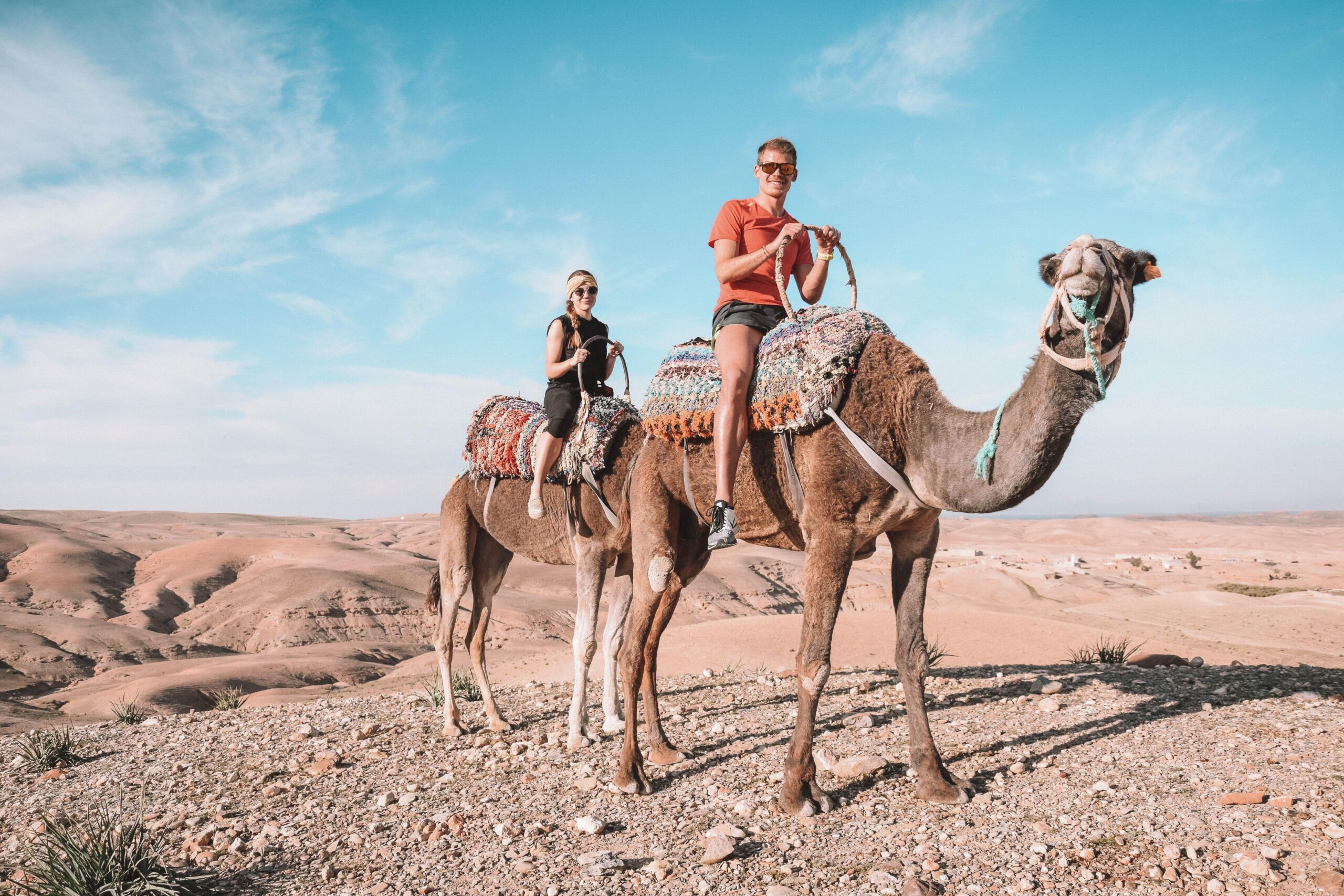
For many, the quintessential Moroccan adventure is the camel ride. It is a journey that evokes the spirit of the ancient trans-Saharan trade caravans and offers a rhythmic, slow-paced perspective on the Moroccan wilderness. Whether you are traversing the palm groves on the city’s outskirts or venturing into the deep dunes of the Agafay, a camel ride is an essential rite of passage for any visitor.
The Spirit of the Desert: Why Ride a Camel?
The dromedary, or the one-humped Arabian camel, is known as the “Ship of the Desert.” For centuries, these resilient creatures were the only means of crossing the vast Saharan expanse, carrying salt, gold, and silk. When you mount a camel in Marrakech, you are not just engaging in a tourist activity; you are stepping into a historical legacy.
Unlike a motorized quad bike or a 4×4 vehicle, a camel moves with a swaying, undulating gait that forces you to slow down. It is a meditative experience. The height of the camel provides a unique vantage point over the terrain, and the silence of their padded feet on the sand allows you to hear the wind and the distant call of the desert birds. It is the ultimate way to disconnect from the digital world and reconnect with nature.
Choosing Your Setting: Palmeraie vs. Agafay Desert
When planning your camel trek in Marrakech, the first decision you must make is the location. Depending on your schedule and your desire for “desert” scenery, you generally have two primary options.
The Palmeraie: An Oasis Escape
Located just on the northern edge of the city, the Palmeraie is a lush oasis containing over 100,000 palm trees. This is the most convenient option for those with limited time. A camel ride here typically lasts one to two hours and takes you through shaded groves, past traditional Berber villages, and along dried riverbeds. It is an excellent choice for families with children or those who want a taste of the desert without a long commute. Many tours in the Palmeraie also include a stop at a local home for traditional mint tea, offering a glimpse into rural Moroccan hospitality.
The Agafay Desert: The Stone Desert Experience
If you are looking for a more dramatic, “lunar” landscape, the Agafay Desert is located about 45 minutes south of Marrakech. While it is a stone desert rather than the rolling sand dunes of the Sahara, its vast, barren hills and views of the snow-capped Atlas Mountains are breathtaking. A camel ride at sunset in Agafay is arguably one of the most romantic and photogenic experiences in Morocco. The stark contrast between the golden earth and the purple mountain peaks creates a surreal atmosphere that feels worlds away from the city noise.
What to Expect: The Practicalities of the Trek
For the uninitiated, mounting a camel can be the most intimidating part of the journey. Camels stand up back-legs first, which means you will lean forward and then backward quite suddenly. It is important to hold onto the saddle handle firmly and follow the instructions of your “Caravanier” (the camel guide).
What to Wear
Comfort and protection are key. Even if the weather is hot, long trousers are highly recommended to prevent the saddle from chafing your legs. A light, breathable long-sleeved shirt will protect you from the intense Moroccan sun. Most tour operators will provide you with a “Cheich”—the traditional indigo tuareg scarf—and show you how to wrap it around your head and face to protect you from dust and sun. Not only is it practical, but it also makes for the perfect desert photograph.
Respecting the Animals
As an ethical traveler, it is vital to ensure that your camel ride is conducted with respect for animal welfare. Look for operators who provide their camels with plenty of shade, water, and rest. The camels should look well-fed and have healthy-looking coats. Many modern operators in Marrakech are committed to sustainable tourism, ensuring that the animals are treated as partners rather than tools.
The Magic of the Sunset Ride
While morning treks are cooler, the sunset camel ride is the gold standard for travelers. As the sun dips below the horizon, the Moroccan sky transforms into a canvas of deep oranges, pinks, and violets. The “Red City” truly earns its name during this hour, as the dust in the air catches the light and casts a warm glow over the entire landscape.
Most sunset tours conclude with a traditional dinner under a nomadic tent. Imagine sitting on thick Moroccan rugs, surrounded by lanterns, enjoying a steaming lamb tagine and handmade couscous while listening to the rhythmic beat of Gnawa music. It is an immersion into the Berber culture that leaves a lasting impression on the heart.
Conclusion
A Marrakech camel ride is more than just a photo opportunity; it is an invitation to embrace a slower, more ancient way of life. Whether you are wandering through the thousands of palms in the Palmeraie or watching the shadows stretch across the rocky hills of Agafay, the experience offers a rare moment of peace and perspective. It reminds us that sometimes, the best way to see the world is not at 100 miles per hour, but at the steady, rhythmic pace of a desert caravan.
Would you like me to recommend some highly-rated ethical tour operators in Marrakech that specialize in sunset camel treks and Berber dinner experiences?